Table of Contents
- Why Packaging Lines Are Ripe for Automation Upgrades
- Core Technologies Driving Smart Packaging Automation
- How Smart Automation Applies Across Packaging Operations
- The Business Case for Packaging Line Upgrades
- Common Challenges in Modernizing Packaging Lines
- Packaging Automation for Consumer Goods
- Why Manufacturers Choose South Shore Controls
- FAQs
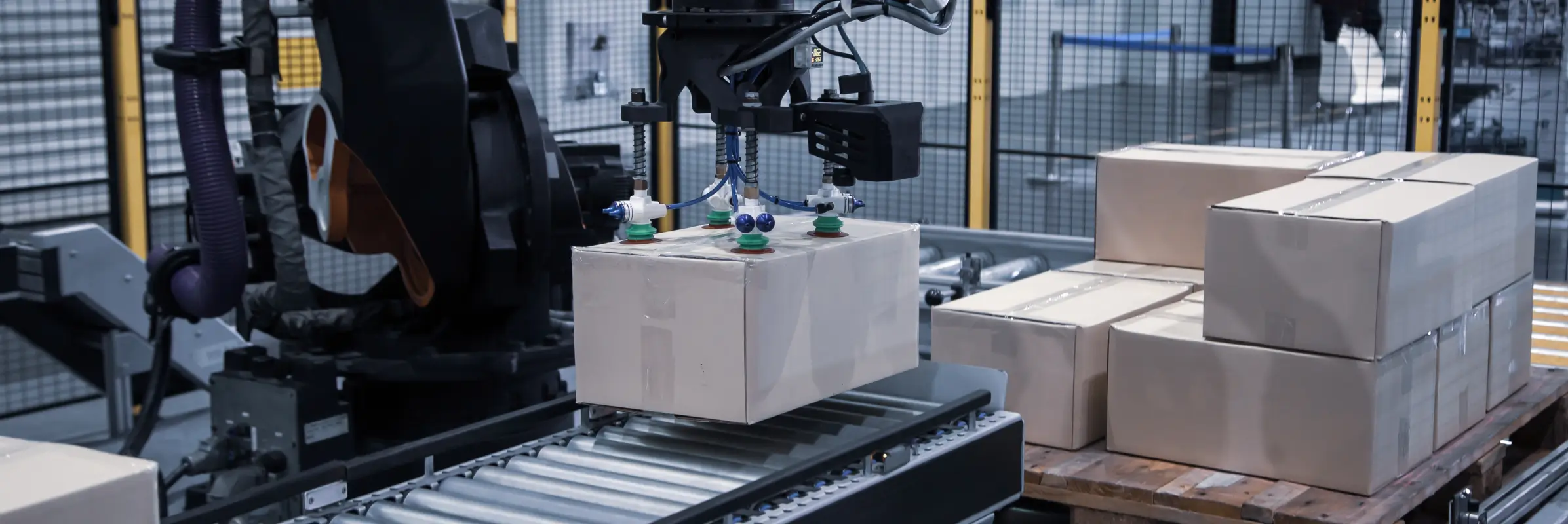
Manufacturers under pressure to increase throughput, reduce labor dependency, and maintain consistent product quality are turning to packaging line automation as a core strategy for staying competitive. But modernizing a packaging line isn’t just about swapping out a single machine. It requires a coordinated approach that integrates robotics, intelligent controls, vision systems, and data-driven monitoring throughout the packaging process. Smart automation for packaging lines gives manufacturers the tools to achieve faster changeovers, tighter quality tolerances, and measurable returns that justify the investment.
In this article, we’ll break down the technologies behind next-generation automated packaging systems, walk through how they apply to critical operations like case packing, labeling, palletizing, and inspection, and address the real challenges manufacturers face when upgrading legacy lines.
Why Packaging Lines Are Ripe for Automation Upgrades
Many packaging operations still rely on semi-automated or manual processes that were designed for a different era of production volumes and SKU complexity. As consumer demand shifts toward smaller batch sizes, more frequent changeovers, and tighter regulatory requirements, these older systems become bottlenecks. Labor shortages compound the problem. Discovering and retaining skilled operators for repetitive packaging tasks grows more difficult each year.
Packaging line modernization addresses these issues head-on. By integrating smart controls, sensor networks, and robotic handling into existing workflows, manufacturers can reduce cycle times, minimize human error, and scale output without proportional increases in headcount. The result is a packaging operation that adapts to changing production demands rather than limiting them.
South Shore Controls works with manufacturers across industries to design and implement automation and control solutions that transform outdated packaging processes into high-performing, data-connected systems.
Core Technologies Driving Smart Packaging Automation
Several categories of packaging automation technologies work together to create a modern, intelligent packaging line. Understanding how each contributes helps manufacturers prioritize investments and sequence upgrades strategically.
Robotics and Robotic Integration
Robotic systems handle the repetitive, high-speed tasks that are most susceptible to human error and fatigue, such as pick-and-place operations, case loading, palletizing, and sortation. Six-axis robots, SCARA units, and collaborative robots (cobots) each serve different roles depending on payload, speed, and workspace requirements. Modern robotic platforms support tool-quick-change systems that enable rapid product changeovers without manual retooling.
South Shore Controls provides comprehensive robot integration services as a certified FANUC integrator, helping manufacturers deploy robotic solutions that fit within existing line layouts and production schedules.
Vision Systems and Automated Inspection
Vision-guided automation is critical for maintaining quality across high-speed packaging operations. Cameras and sensors verify label placement, confirm package integrity, detect foreign materials, read barcodes, and validate print quality, all at line speed. These systems remove the subjectivity of manual inspection and generate traceable quality data for every unit produced.
For manufacturers that need turnkey inspection capabilities, South Shore Controls designs and builds automated inspection systems that combine robotic part handling, machine vision, and custom controls engineering into a single, production-ready cell.
PLC, HMI, and Advanced Controls
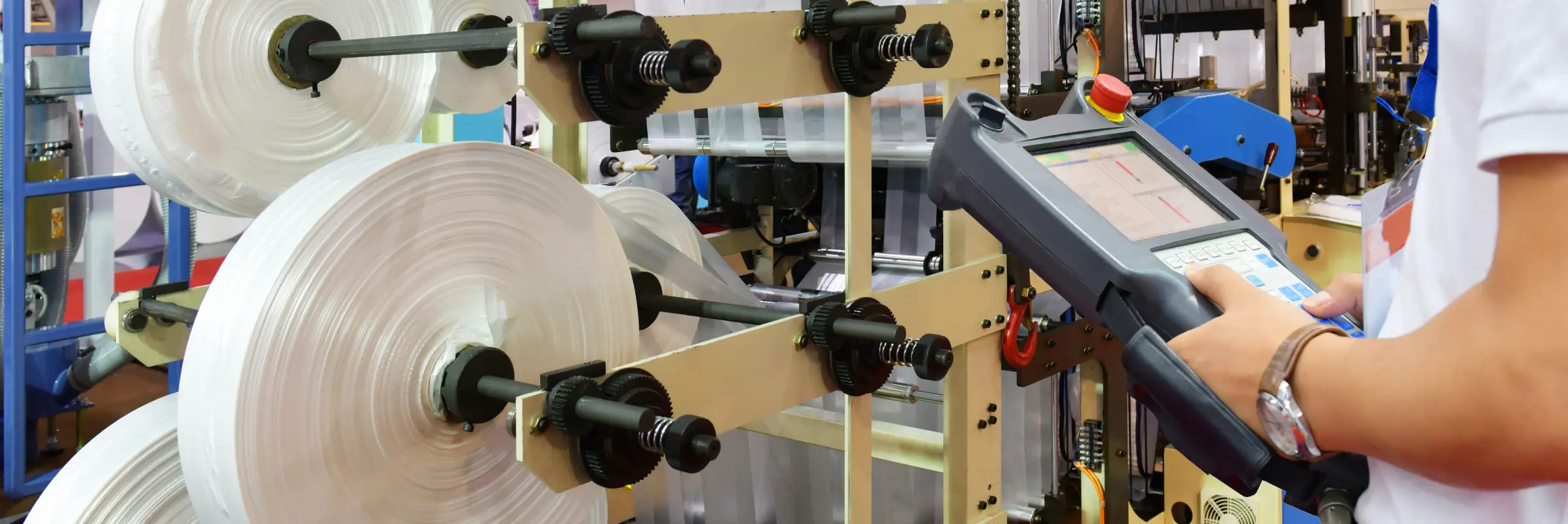
Programmable logic controllers (PLCs) and human-machine interfaces (HMIs) form the operational backbone of any industrial packaging automation system. Modern PLCs coordinate multi-axis motion, manage I/O across distributed devices, and communicate with higher-level manufacturing execution systems (MES). Updated HMI platforms give operators real-time visibility into line performance, alarm management, and recipe-driven changeover parameters.
South Shore Controls’ engineering team brings deep proficiency across multiple PLC platforms, including Allen Bradley, Siemens, and ABB, and delivers custom HMI programming tailored to each client’s production environment.
IoT Monitoring and Data Connectivity
Connecting packaging equipment to an Industrial Internet of Things (IIoT) platform unlocks real-time performance monitoring, predictive maintenance alerts, and production analytics that drive continuous improvement. Sensors embedded throughout the line feed data on cycle times, reject rates, temperature, vibration, and energy consumption into centralized dashboards accessible from the plant floor or remotely.
South Shore Controls integrates IoT monitoring into new and existing automation systems, giving manufacturers actionable intelligence without requiring a complete infrastructure overhaul.
How Smart Automation Applies Across Packaging Operations
Packaging line smart automation isn’t a one-size-fits-all solution. Different stages of the packaging process benefit from different combinations of technology.
Case Packing and Cartoning
Automated case packers use robotic arms or servo-driven mechanisms to erect, load, and seal cases at speeds that far exceed manual operations. Smart controls allow these systems to switch between product formats using stored recipes, reducing changeover times from hours to minutes. Integrated vision confirms case counts and orientation before sealing.
Labeling and Coding
Automated labeling systems apply pressure-sensitive labels, shrink sleeves, or direct-printed codes with sub-millimeter accuracy. Vision verification immediately downstream confirms label presence, placement, and legibility. For manufacturers running multiple SKUs, recipe-based controls tied to barcode scanners ensure the correct label is applied to every product without operator intervention.
Palletizing and End-of-Line Handling
Robotic palletizers arrange finished cases onto pallets according to pre-programmed patterns optimized for load stability and shipping efficiency. These systems handle heavy, repetitive lifting that creates ergonomic risks for manual operators. Modern palletizing cells integrate with upstream conveyors and stretch wrappers to create a fully automated end-of-line sequence.
Inline Inspection and Quality Assurance
Automated inspection at multiple points along the packaging line catches defects before they reach the customer. Vision systems verify seal integrity, fill levels, label accuracy, and package dimensions. Reject mechanisms divert non-conforming products automatically, and inspection data feeds directly into quality management systems for traceability and trend analysis.
Measuring ROI: The Business Case for Packaging Line Upgrades
Investing in smart packaging automation delivers measurable returns across several operational dimensions.
Throughput Gains
Automated systems run at consistent speeds without breaks, shift changes, or fatigue-related slowdowns. Manufacturers commonly see 20–40% increases in line output after automation upgrades, depending on the baseline level of manual involvement.
Labor Cost Reduction
While automation doesn’t eliminate the need for skilled personnel, it dramatically reduces the headcount required for repetitive packaging tasks. Operators transition into supervisory and maintenance roles, and the overall labor cost per unit drops significantly.
Improved Quality Consistency
Automated inspection catches defects that manual operators miss, reducing scrap rates and customer complaints. For regulated industries, the traceable data generated by automated systems simplifies compliance audits and reduces risk.
Reduced Downtime
Smart automation systems with IoT connectivity enable condition-based monitoring that identifies wear patterns and component degradation before failures occur. Scheduled maintenance windows replace unplanned outages, keeping overall equipment effectiveness (OEE) high.
Manufacturers looking to quantify these benefits for their specific operations can work with South Shore Controls’ engineering team to conduct a thorough evaluation of current line performance and identify the highest-impact automation opportunities.
Common Challenges in Modernizing Legacy Packaging Lines
Upgrading an existing packaging operation brings real challenges that need to be addressed with a structured approach.
Integrating New Technology With Existing Equipment
Most manufacturers aren’t starting from a blank slate. Legacy conveyors, fillers, sealers, and other equipment represent significant capital investments that still have useful life. The key is integrating new automation components—robots, vision systems, updated controls—with this existing equipment so the line functions as a cohesive system rather than a collection of disconnected machines.
South Shore Controls specializes in system integration that connects new technologies with legacy infrastructure. Our multi-OEM expertise means we work across different equipment brands and control platforms to create unified, supportable systems.
Managing Downtime During Upgrades
Production schedules don’t pause for automation projects. Effective packaging line upgrades require careful planning to minimize disruption—staging equipment offsite, conducting pre-build and testing before installation, and scheduling cutover during planned maintenance windows.
South Shore Controls’ turnkey approach covers in-house design, manufacturing, testing and validation, and on-site commissioning to reduce installation time and accelerate the path to production.
Scalability and Future-Proofing
Today’s packaging automation investment needs to accommodate tomorrow’s production requirements. Modular system architectures, open communication protocols, and expandable I/O configurations ensure that a modernized line can scale as volumes grow or product lines change.
Workforce Training and Adoption
New automation technology is only effective if operators and maintenance staff know how to use it. Comprehensive training during and after deployment ensures the team can operate, troubleshoot, and maintain the upgraded system with confidence. South Shore Controls provides training services as part of every automation project.
Packaging Automation for Consumer Goods and Beyond
Consumer packaged goods (CPG) manufacturers face some of the most demanding requirements for speed, flexibility, and quality in packaging operations. High SKU counts, frequent promotional packaging changes, and strict retail compliance standards make smart automation essential.
South Shore Controls has deep experience delivering consumer goods automation solutions that address these challenges with custom-designed systems built for the realities of CPG production. Our approach extends across industries, from food and beverage to pharmaceuticals to building materials, wherever packaging quality and efficiency drive competitive advantage.
Why Manufacturers Choose South Shore Controls
South Shore Controls is a single-source automation partner that handles every phase of a packaging automation project, from initial concept and engineering through panel build, integration, programming, testing, and ongoing support. Our automation and controls division provides the full spectrum of services manufacturers need to modernize packaging lines with confidence.
What sets our approach apart is the depth of in-house capability. Mechanical design, electrical design, software development, fabrication, and field service all operate under one roof at our facility in Mentor, Ohio. This integrated model eliminates the coordination headaches that come with managing multiple vendors and gives our clients a single point of accountability from start to finish.
Whether you’re upgrading a single packaging station or modernizing an entire line, our team collaborates closely with yours to deliver solutions that integrate seamlessly with your existing operations and drive real, measurable results.
Ready to Modernize Your Packaging Line?
If your packaging operation is limited by manual processes, aging controls, or disconnected equipment, smart automation can transform your throughput, quality, and labor efficiency. South Shore Controls partners with manufacturers to design, build, and integrate packaging automation solutions tailored to your specific production goals.
Contact our engineering team today to schedule a consultation and start building the business case for your packaging line upgrade. Let’s build a smarter, faster, more reliable packaging operation, together.y.
FAQs
How do smart automation systems handle frequent product changeovers without causing downtime?
Modern smart automation platforms use recipe-driven controls stored in the PLC and HMI. When a new product format is needed, operators select the appropriate recipe from the interface, and the system automatically adjusts servo positions, robot paths, vision parameters, and label configurations. Tool-quick-change mechanisms on robotic end-effectors further speed the process. In well-designed systems, changeovers that once took 30–60 minutes of manual adjustment can be completed in under five minutes with minimal operator involvement. South Shore Controls engineers these capabilities into every system integration project to maximize uptime across high-mix production environments.
What industry standards should I consider when integrating smart automation into a packaging line?
Several standards apply depending on your industry and the specific automation technologies involved. ISO 12100 and ANSI/RIA 15.06 govern machine safety and risk assessment for robotic systems. IEC 62443 addresses cybersecurity for industrial automation and control systems, which is increasingly important as packaging lines connect to enterprise networks through IoT. For food and pharmaceutical packaging, compliance with FDA 21 CFR Part 11 (electronic records) and GFSI-recognized food safety schemes may also apply. South Shore Controls designs systems with these standards in mind and conducts rigorous testing and validation to verify compliance before deployment.
Can an existing semi-automated packaging line be upgraded incrementally with smart automation?
Yes—and an incremental approach is often the most practical path forward. Manufacturers can start by automating the highest-impact bottleneck on the line, such as end-of-line palletizing or inline inspection, and expand from there as budget and production schedules allow. The key is designing each phase with a scalable architecture—open communication protocols, modular controls, and expandable I/O—so that new automation components integrate cleanly with what’s already in place. South Shore Controls specializes in system upgrades that breathe new life into legacy equipment while building toward a fully integrated, smart packaging line.